How I Use Solana Explorers to Track Tokens and NFTs (and Stop Chasing Ghost Transfers)
Whoa!
I saw a phantom token move across a Solana slot last week and my gut dropped. At first it looked like a mundane lookup—tx ID, source, destination—yet the deeper I went it felt like chasing a mirage. Initially I thought it was just a delayed confirmation, but then realized the metadata flagged a freshly minted token that matched a rug pattern I’d seen before, so I kept digging. Lessons came fast; some were obvious, some were annoying, and a few actually changed my daily workflow.
Really?
Yes. Explorers are more than block scanners. They are forensic tools when you know where to click, and they can be noise machines when you don’t. On one hand an explorer gives you raw transparency, though actually—wait—there’s a learning curve and some UX quirks that hide useful signals. My instinct said “trust the last confirmed slot,” but then data showed me that the slot told only part of the story, and that’s where token trackers and NFT timelines matter.
Hmm…
I used to hop between tabs, copying txids and pasting into search bars like it was 2019. It was messy and slow. Then I started treating explorers like a dashboard with filters, and somethin’ changed: I could trace a token’s mint, follow holder distributions, and spot anomalous spikes without panicking. Honestly, it saved me a few late-night heartbeats and a small headache on Main Street crypto (metaphorically speaking, coast-to-coast).
Whoa!
Here’s the practical thing—token trackers are your quickest answer when you want ownership and supply details. Medium-level checks reveal holder concentration, token decimals, and transfer patterns. Longer checks—like digging into on-chain metadata history and associated program logs—actually clarify whether a token is legitimate or not, and that sometimes requires patiently reading raw instruction data. I’m biased, but a good token tracker will save you from chasing the the wrong address for hours.
Really?
NFT tracking is a different animal. It carries provenance questions, and often the sale history tells a story that raw transfer logs don’t. Short-term flips can be normal, but sudden mass transfers out of multiple wallets is a red flag. I once followed a mint across multiple collections and realized the bridge used was a dusting vector; that insight came only after comparing marketplace events to on-chain ownership data. Okay, so check this out—marketplace listings, creator royalties, and metadata updates together build a timeline that is hard to fake en masse.
Whoa!
Now, not all explorers are equal. Some expose program logs and parsed instructions nicely; others bury them behind cryptic JSON that makes your eyes water. Initially I thought explorer UI parity was a solved problem, but then I noticed how certain explorers index metadata differently, which changes search behavior and result ordering. Actually, wait—let me rephrase that: it’s less about “solved” and more about “preferences and features”—and those preferences often reflect real trade-offs between speed, depth, and UX. This part bugs me, because you should not need a degree in indexing to find a mint authority.
Hmm…
My workflow became: quick glance for confirmations, token tracker for supply/holders, NFT timeline for provenance, and program logs for context. Short checks settle obvious questions. Deeper checks prevent dumb mistakes. The thing is, sometimes you need to chain those checks together to get to the truth—no single view gives the whole picture.
Where I go first (and why I trust certain explorers)
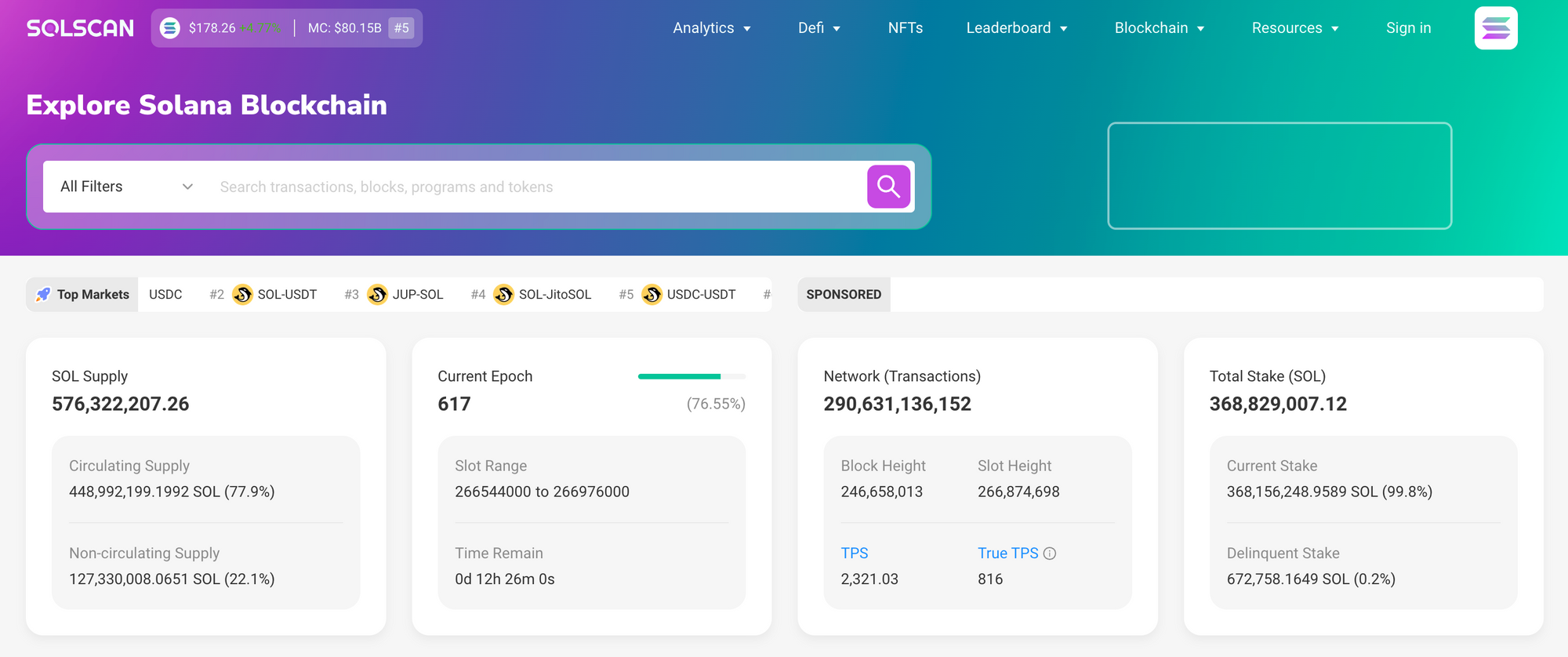
I often start with a focused explorer page that surfaces both parsed events and raw logs; that way I can triangulate quickly. For an official-looking interface that balances parsed data and access to logs, I recommend checking the solscan explorer official site because it tends to present token and NFT info cleanly while still letting you dive into program instructions when necessary. Short answer: use a tool that shows holder distribution, token mint history, and the marketplace pulls for NFTs all in one place. Longer answer: different explorers have subtle parsing differences, so cross-checking a suspicious tx on two tools is a habit worth forming (and yes, I do it very very often).
Whoa!
Practical tips you can use right away: start by copying the tx ID into the explorer and look at confirmation time stamps first. Then check the token mint and holder list if it’s a fungible token, or the mint authority and metadata update history if it’s an NFT. If something looks odd—mass transfers, repeated tiny transfers from many addresses—pause and scan program logs for unusual instructions before reacting. My instinct has been wrong a few times; those are useful lessons though.
Really?
Yeah. Don’t rely solely on social signals. A shiny Twitter thread might point you in the right direction, but on-chain truth is in the blocks and logs. For example, a project might update metadata off-chain while on-chain events show no sale—so marketplace listings can be misleading. On the flip side, program logs can be noisy with lots of internal instructions, so you need to know which instruction codes to watch for.
Hmm…
Here’s a short checklist I use for token or NFT investigations: confirm slot/time; check mint and supply; audit holders for concentration; view first minters and any authority changes; inspect program logs for mint or transfer instructions. Short checks first, then deeper verification if anything is ambiguous. This approach has reduced false alarms for me and made my alerts actually actionable.
FAQ
How do I tell if a token is a scam or legit?
Look at the mint authority and supply changes first. If authority moves to an unknown or mutable address shortly after mint, be cautious. Also check holder concentration—if one or few wallets hold 90%+, that’s a risk signal. Cross-check marketplace activity (if relevant) and program logs to see who initiated transfers. I’m not 100% sure on every case, but these checks catch most shady setups.
Can I rely on one explorer exclusively?
Short answer: no. Different explorers parse and index differently, and some expose program logs more clearly than others. On one hand, using one tool is faster; though actually, cross-checking helps avoid misinterpretation—so I recommend at least two. Personally, I keep one as my go-to and another for verification.
What if I find a suspicious transfer—what’s next?
Document the tx and relevant addresses, then pause before acting. If it’s your funds, start with the program logs and reach out to community channels (official Discord or verified support) with the tx link. If it’s not your funds, observe patterns—mass draining, repeated tiny transfers, coordinated moves—and report if it looks like abuse. I’ll be honest: sometimes it’s normal, sometimes it’s not, and pattern recognition matters more than panic.